

Financial crime has entered a new era. Criminal networks now operate at scale, with the coordination and sophistication of multinational corporations, powered by AI that enables fraud to be carried out at an industrial scale. In just two years, the threat has escalated dramatically, and meeting it demands a response that matches its scale: collective, not siloed.
For financial institutions operating in today’s world of near real-time, interconnected payment environments, that means visibility can no longer stop at the institution’s boundaries.
This roundtable will bring together senior fraud, AML and financial crime leaders to discuss how consortium-level data and collective intelligence can extend visibility beyond a single institution, reduce false positives, and help investigators focus their time where it matters most.
Attend to gain insights on:
- What a collective intelligence model delivers that internal data alone cannot
- How to defend against AI-enabled attacks while meeting regulatory expectations
- Convergence of fraud and AML, and rethinking how FIs organise around financial crime risk
Welcome and participant introductions
Discussion:
- The scale of the challenge: what has changed most in the threat landscape over the past 12–18 months, and where do financial institutions remain most vulnerable?
- Beyond internal data: is internal customer and transaction data still sufficient to understand financial crime risk, or does the future depend on a broader intelligence ecosystem? What information is still missing today?
- The investigator burden: what intelligence, technology or operational changes could free teams to spend more time investigating genuine criminal activity rather than false positives?
- Money mules and real-time payments: as real-time payments become the norm, are today’s detection approaches keeping pace? What capabilities are needed to identify mule accounts before funds are dispersed?
- AI as a double-edged sword: where do you believe AI delivers the greatest value today? What governance or evidence are needed before trusting it with higher-risk decisions?
- Breaking down silos: should different crime types continue as separate functions, or is it time for a single, intelligence-led approach to financial crime? What organisational barriers remain?
- Collaboration without compromise: what is the biggest barrier to effective information sharing today, and what would need to change to unlock greater industry collaboration?
- Looking ahead: if you could remove one barrier preventing the financial sector from getting ahead of organised financial crime, what would it be and why?
Closing remarks
(60 minutes)
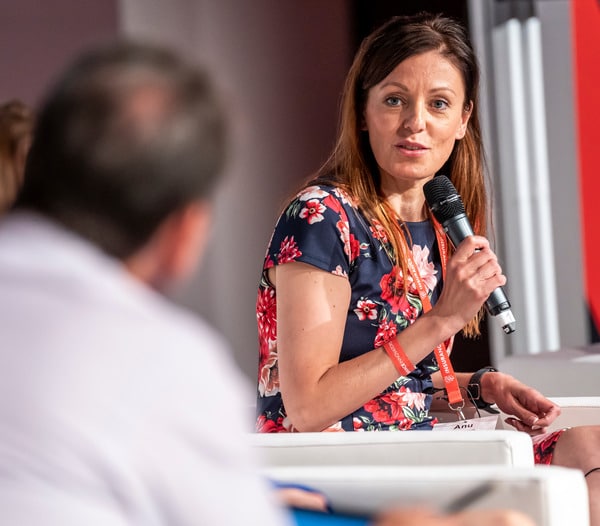
Speakers:
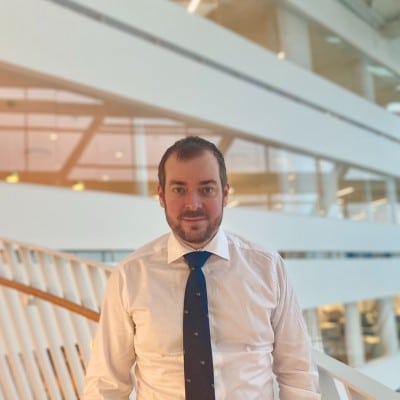

Fredrik Tidqvist
Head of Intelligence & Analytics, ECP
Swedbank

Kamlesh Harry
Strategic Advisor, Fraud Solutions
Nasdaq Verafin
Request an invitation
This roundtable is designed for senior figures working across banking and financial services.
Fill in this short form if you meet the above criteria and would like to participate in the discussion on 27 October. All invitation requests will be vetted and approved (or declined) by the organizer.
About Nasdaq Verafin
Nasdaq Verafin provides Financial Crime Management Technology solutions for Fraud Detection, AML/CFT Compliance, High-Risk Customer Management, Sanctions Screening and Management, and Information Sharing. More than 2,700 financial institutions, representing $11T in collective assets, use Nasdaq Verafin to prevent fraud and strengthen AML/CFT efforts. Visit www.verafin.com or call 1-877-368-9986.